Learn from real cases
Search and work through structured GI fluoroscopy cases with clinical context and paired imaging.
An AI-driven educational archive for radiology training
GI fluoroscopy exposure during radiology training has declined substantially. I wanted to explore whether AI could help turn existing teaching archives into a more interactive way to learn.
The problem
GI fluoroscopy exposure during radiology residency has declined substantially, while reduced procedural exposure and limited mentorship can make hands-on learning harder to access.
At the same time, valuable legacy teaching cases can be difficult to use in modern educational workflows.
The project started with a simple question:Could we turn those cases into something residents could actually learn from interactively?
The idea
Search and work through structured GI fluoroscopy cases with clinical context and paired imaging.
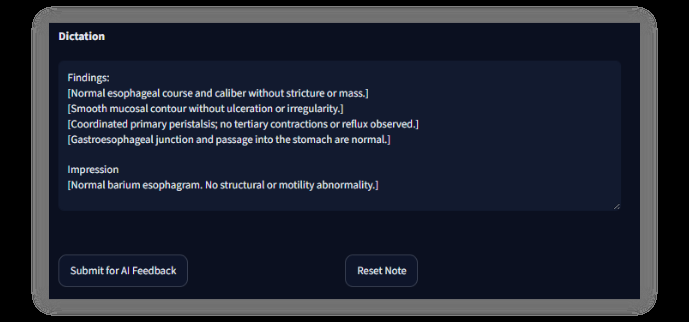
Interpret cases and practice structured reporting instead of simply looking at the diagnosis.
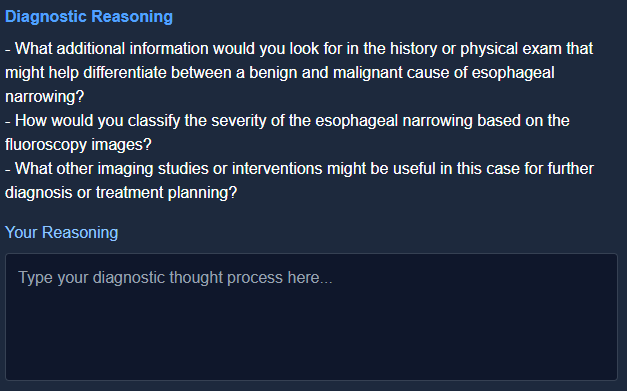
AI-generated feedback, teaching points, and follow-up questions encourage learners to explain their reasoning rather than simply reveal an answer.
How it works
The platform uses case retrieval to connect learner questions with relevant teaching cases. Learners review the imaging, submit their interpretation, and receive structured AI-supported feedback designed to reinforce reporting and diagnostic reasoning.
Faculty oversight remains part of the model to evaluate the quality and educational accuracy of AI-generated feedback.
Interactive learning
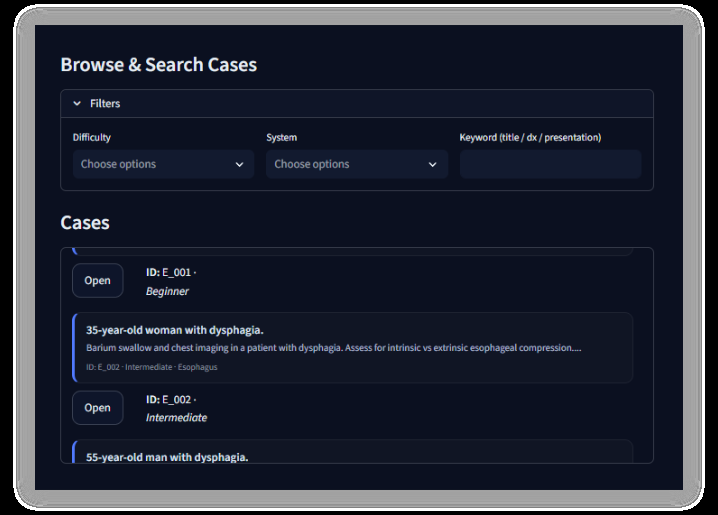
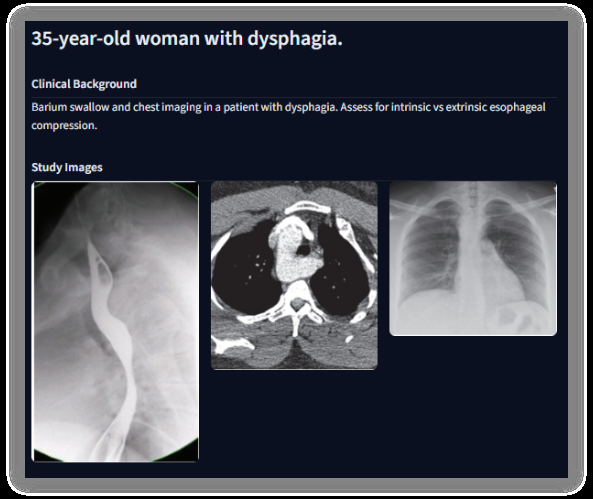
Cases can be searched by factors such as difficulty, system, or keyword.
Learners practice describing findings using standardized templates.
Instead of simply giving an answer, the system can ask follow-up questions that encourage diagnostic reasoning and self-assessment.
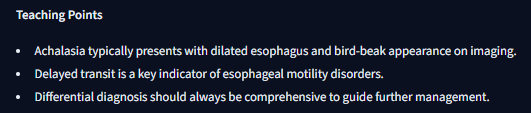
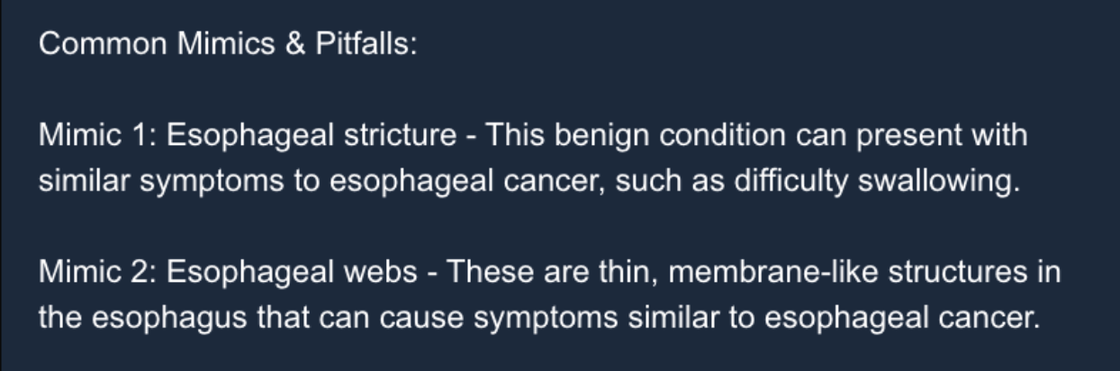
Cases conclude with key imaging features, diagnostic pearls, common mimics, and pitfalls.
Why I built it
I built the first version during medical school because I was interested in a bigger question:
Can AI help us learn radiology better—not just automate radiology once we’re practicing?
The project combined two things I was already interested in: medical imaging and building better ways to learn.
I developed the web-based prototype in Python/Streamlit, selected and organized cases, reviewed the literature, and worked with radiology faculty to develop the educational framework.
What’s next
The next phase focuses on faculty validation and prospective evaluation of the learning experience.
Planned evaluation includes learner confidence, faculty assessment of AI-generated feedback, agreement between AI and faculty evaluation, and performance across different case difficulty levels.
Prospective educational validation has not yet been completed.
Project information
RSNA 2025 Educational Exhibit
Loma Linda University · Diagnostic Radiology